
1. What "futa" actually means
Futa is "two", nari is "form" or "figure". Dictionary.com's entry traces the word to a 12th-century Japanese scroll, the Book of Disease (病草紙), where it described a person with both male and female anatomy — a medical description, not a genre. By the 17th century it had drifted into theatre: futanarihira, "androgynous beauties", for Kabuki performers who played both men and women. The anime and hentai sense everyone means now is much younger, essentially a 1990s doujinshi phenomenon.
You'll still find product copy defining futanari as "hermaphrodite" or "intersex person". It isn't, and we don't use it that way. Futanari is a category of fictional characters; Japanese uses han'in'yō or intasekkusu when talking about intersex people. Getting this wrong is sloppy, and it's one of the reasons so much copy in this niche reads like it was assembled from a glossary.
2. What is a futa sex doll?
The short version is above. The useful version is knowing what it isn't, because the categories blur in most catalogues, including ours.
| Category | Defining feature | Typical search terms |
|---|---|---|
| Standard anime doll | Feminine anatomy, anime proportions | anime sex doll, hentai doll |
| Futa / futanari doll | Feminine body plus male anatomy; usually both in one sculpt | futa sex doll, futanari doll, futa onahole |
| Shemale / trans doll | Realistic adult proportions, live-action framing | shemale doll, trans doll |
| Femboy doll | Slim androgynous frame, soft styling | femboy doll |
Two mix-ups cost people money. Futa is not a synonym for shemale: one is a deliberately exaggerated illustration style, the other aims at photographic realism. And futa is not femboy — a femboy doll is about a slender frame, not dual anatomy. Some of our compact models sit right on that line (Mini Tori, for instance), which is exactly why the specification list matters more than the title. On the older terms in that table: shemale is widely considered outdated and offensive when applied to people. We only use it here because it's still a live search term and a live catalogue label, and because pretending it doesn't exist makes the comparison less useful.
3. Anatomy configurations explained
Single anatomy: fixed or attachable
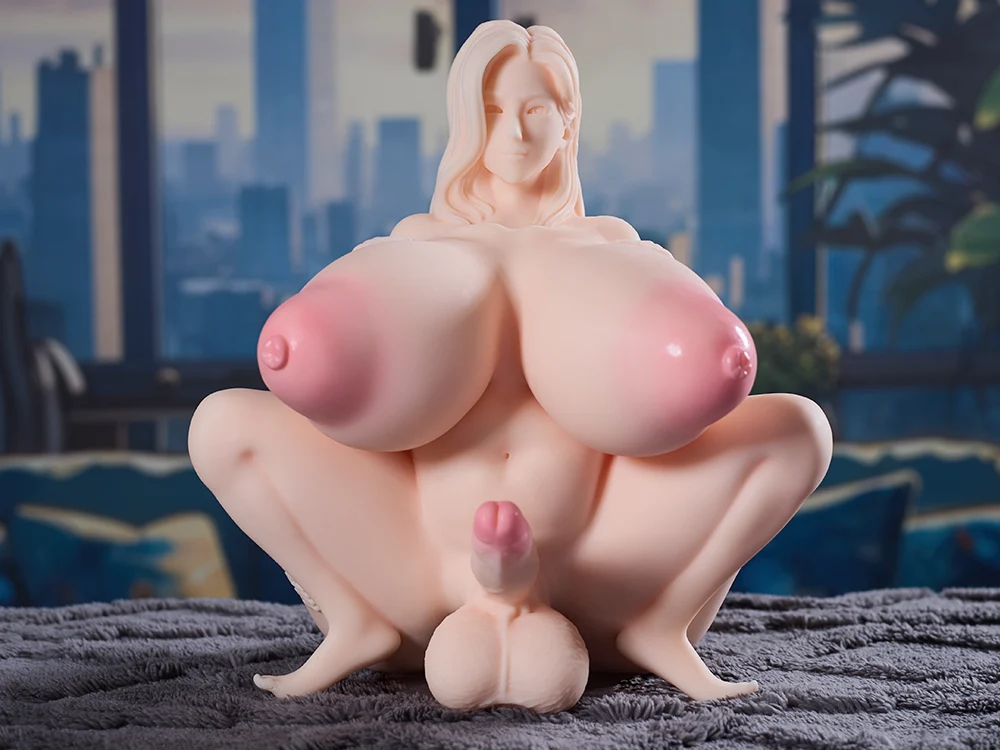
The simplest build is a feminine body with one male organ, either sculpted in or supplied separately. Fixed means a seamless look and one less part to lose. Attachable — magnetic or screw mount — comes apart for cleaning and packs down smaller. The 1.0 Futa is explicitly a fixed build; its page makes a point of saying the anatomy is integrated rather than detachable, cast in one piece of soft silicone.
Dual anatomy, and the channel count problem
Keep both anatomies in one sculpt and you get independent internal channels, which is where the numbers in product titles come from. Three channels usually means vaginal, anal and penile. Five and six add breast channels or a second organ. Robin is built around five customisable tunnels; Arrow goes to six.
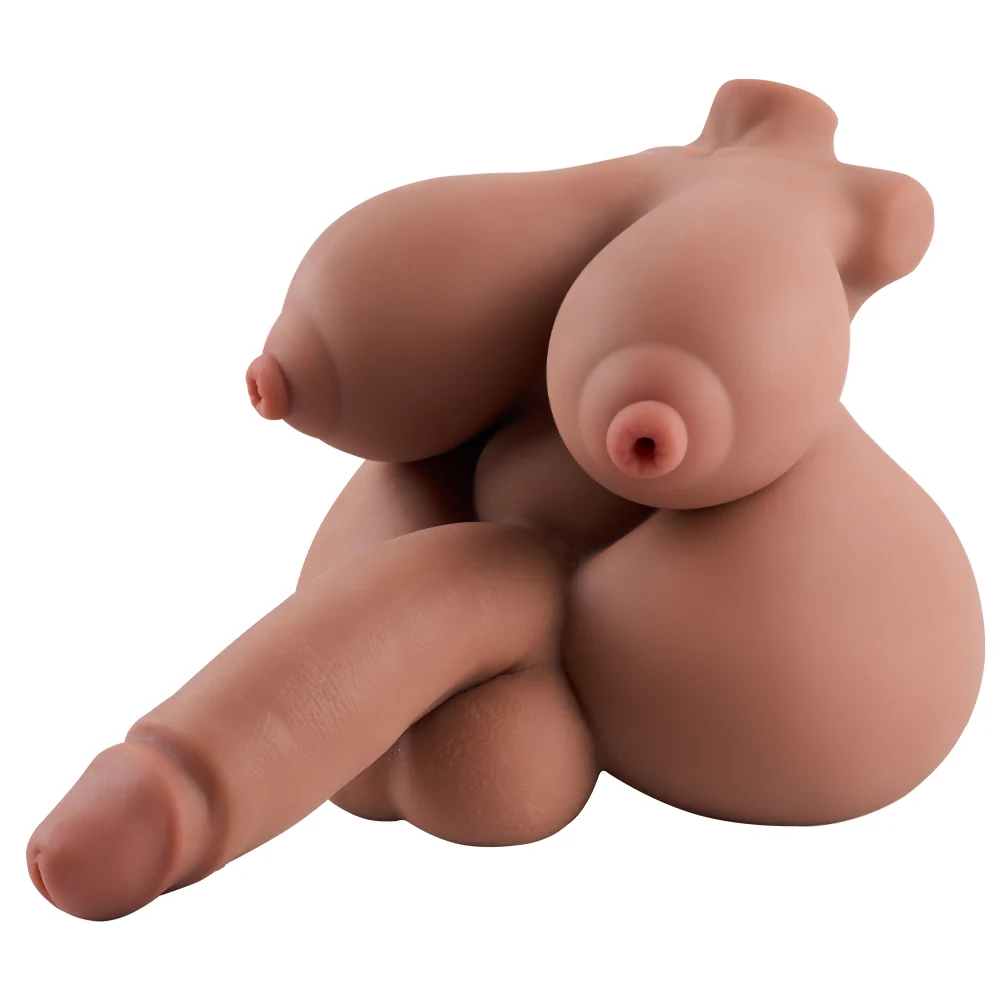
Here's the thing nobody puts in the listing: every extra channel is another passage to flush, dry and inspect. Six channels is not six times the fun if the doll ends up living in a cupboard because cleaning it is a chore. We sell them, and we'd still tell most people to start with three or five.
The odd ones: nipple channels, insertable urethra, two organs
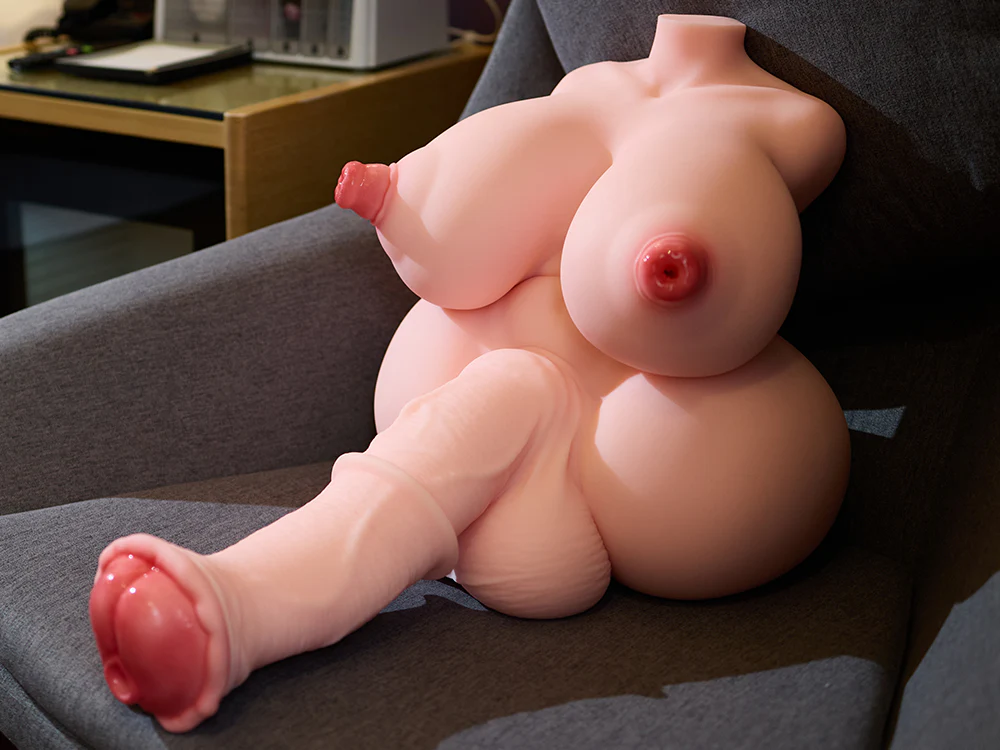
Three designs come up often enough to be worth decoding. Nipple or breast channels put passages in the bust — Mini Robin does this in four channels at $63. Insertable urethra (penetrable penis) means a channel running through the organ itself; the 37 lb Molly lists five entrances — two breast, vaginal, anal, penile — at 17.1 kg, 44 cm tall, with 17 cm vaginal and anal passages in TPE. And dual-organ builds sculpt two instead of one; Beatus is the one we carry.
4. Size, weight, and where you'll put it
| Format | Typical weight | Typical price | Storage | Best for |
|---|---|---|---|---|
| Mini onahole / pocket | under 2 kg | $60–$75 | Drawer, travel | First purchase, small budget |
| Mini torso | 1.9–5 kg | $190–$370 | Shelf box | Presence without the footprint |
| Large torso | 5–17 kg | $370–$700 | Dedicated box | Most channels, most sculpt detail |
| Full / display figure | varies | $250–$800 | Display space | Collectors who care about the sculpt |
Weight is the honest proxy here. A 17.1 kg torso stays put and carries five independent channels, but it needs a permanent home — the Molly product page even recommends checking the storage box dimensions before you order, because the PVC bag and Styrofoam insert ship with it. At the other end, Mino is 1.9 kg and 30 cm tall and fits in a cupboard, while still having enough mass to feel like an object rather than a toy. Full-size dolls run 25–50 kg in the wider market. That's a different commitment, and most people in this category land on a torso anyway.
5. The full range, with the real numbers
Split by budget, because that's how people actually shop. All figures below come from the individual product pages.
Under $200
| Model | Format | Configuration | Material | Weight | Price* |
|---|---|---|---|---|---|
| Mini Robin | Pocket onahole | 4 channels, nipple channels | n/s | Pocket size | $63 |
| Mini Tori | Mini torso | Femboy-leaning compact build | n/s | Mini | $65 |
| Vale | Torso | Anime torso | n/s | 4.2 kg | $188 |
| Robin | Torso | 5 channels, breast + penile | n/s | Torso | $198 |
| Arrow | Torso | 6 channels | n/s | Torso | $198 |
| Molly 10.4 lb | Torso | 5 channels | n/s | 4.7 kg | $198 |
| Beatus | Torso | Dual-organ design | n/s | Torso | $198 |
| Futa Lucy | Torso | Anime torso | n/s | 5 kg | $198 |
$200 and up
| Model | Format | Configuration | Material | Weight / size | Price* |
|---|---|---|---|---|---|
| 1.0 Futa | Display figure | Integrated anatomy, fixed sculpt | Full silicone | Figure | $288 |
| Mino × TheHelmetGuy | Mini torso | Dual channel (13 cm + 11 cm) | Anti-oil silicone | 1.9 kg / 30 cm | $228 |
| Big Robin | Torso | Insertable organ | n/s | Torso | $368 |
| 37 lb Molly | Large torso | 5 entrances incl. penile channel | TPE | 17.1 kg / 44 cm | $699 |
| Futa Lucy Plus | Large torso | Large-format insertable design | n/s | Large torso | $699 |
* List prices as shown on 10 November 2026. Where a page shows both a list and a sale price, we've used the list price. Sales move; check the page.
Two things stand out once it's all in one place. Under $200, almost everything is the same price and the choice is really about channel count — four, five or six, take your pick. Cross $200 and you start paying for material and sculpt: full silicone, anti-oil silicone, artist-designed forms, real mass. That's the decision the price jump is buying.
And a small confession about the numbers. While checking Mino's page we found its specification table and its own FAQ disagree — 40 cm bust / 1.9 kg / 30 cm / 13 cm + 11 cm in one place, 37 cm / 1.8 kg / 24 cm / two 12 cm channels in the other. We used the specification table, and we're getting the FAQ corrected. If you spot a mismatch like that anywhere else, it's worth flagging before you order.
6. TPE vs silicone: which holds up better?
| TPE | Silicone | |
|---|---|---|
| Feel | Softer, more compliant | Firmer, more rebound |
| Fine detail | Good | Excellent — holds texture and colour blending |
| Porosity | Porous; needs thorough drying | Non-porous; easier to fully sanitise |
| Oil | Can leach mineral oil, needs powdering | None with anti-oil formulations |
| Price | Lower | Higher |
For futa dolls the answer leans a bit harder toward silicone than it does for a standard doll, simply because the defining part of the sculpt is also the most detailed, and it's often the part that gets removed and reinserted. Silicone holds that detail and tolerates the repetition without deforming. Non-porous also matters more on a five-channel doll, where getting the inside genuinely dry is the fiddly bit.
7. So which one should you actually buy?
Start with the budget, then be honest about the cupboard. Those two answers eliminate most of the catalogue.
After that, pick a configuration — fixed, attachable, dual-anatomy, or one of the odd ones — and then count the channels against how much patience you have for cleaning. We keep coming back to this because it's the regret we hear about most: someone buys the six-channel flagship, uses it twice, and it lives in a box because the cleanup is a production. If you're new here, a sub-$200 torso teaches you what you actually care about — channel layout, sculpt, or material — before you've spent $699 finding out.
Material is the last filter. Least upkeep: silicone. Largest, softest build for the money: TPE. And check the shipping terms; everything ships in plain unmarked packaging with a discreet billing descriptor.
8. Cleaning is the part nobody warns you about
Multi-channel dolls are fine to own if you have a routine. They're miserable if you don't.
- Rinse each used channel with lukewarm water, below 40 °C. Hotter water can deform TPE and stress seams.
- Use a mild, fragrance-free toy cleaner or diluted gentle soap. No alcohol, bleach, solvents or abrasives.
- Flush properly — a bulb syringe or cleaning pump reaches the full channel. Repeat until the water runs clear.
- Dry completely. Pat the outside with a lint-free cloth, then leave every channel open to air out. Trapped moisture is what causes odour and material breakdown, and on a six-channel doll this takes real time.
- Detach what can be detached, clean and dry it separately, and keep the small parts together.
- Water-based lubricant only. Silicone-based degrades silicone surfaces; oil-based is a pain to fully remove from TPE.
- Store cool, dry and out of sunlight, in the original foam or a breathable bag. TPE benefits from a light dusting of renewal powder once dry; anti-oil silicone needs none.
- Check seams and channel interiors for wear before each use.
9. The artist problem (and why Mino is odd)

Futanari was defined by illustrators long before anybody sold a doll of it. Which is why the interesting products in this category start from a character drawing, not a generic body sculpt — and why most catalogue copy completely fails to convey them.
Mino, made with TheHelmetGuy, is the clearest case. Its spec sheet is oddly thorough: 1.9 kg, 30 cm tall, 40 / 20 / 32 cm bust-waist-hips, 15 cm anatomy, two independent channels (13 cm anterior, 11 cm posterior, different internal geometry in each), anti-oil silicone. Then there's the bit we didn't expect to find on a product page: the team kept her head but stripped out its internal skeleton with 3D-printed lightweighting, because a full head on that body shifted the centre of gravity and caused wrist fatigue. They even note the head still wobbles slightly in one-handed use. That's a real design decision, described by someone who was in the room — not a feature list.
The original character sheet has a line from the artist: "She's no lucky cat but probably better… keep her fed and all that is good will follow~" You don't get that from a spec table, and you certainly don't get it from a generic category guide.
10. Frequently asked questions
Is futanari the same as shemale? No. Futanari is an illustrated anime/hentai character category; shemale and trans dolls are modelled on realistic adult anatomy. Different sections of the catalogue — see our anime doll collection.
Futa vs femboy — what's the difference? Dual anatomy on a feminine body, versus a slim androgynous frame. Compact models blur the line, so read the spec list.
What's the difference between "futa" and "futanari"? None, in practice. Futa is just the shortened fan term. Some sellers use "futa" for the product and "futanari" for the genre, but there's no consistent rule.
Mini futa doll vs futa onahole — are they different? Barely. "Mini futa doll" points at the character form, "futa onahole" at the usable channel. Our compact models get called both. Compare weight and dimensions instead of the label.
TPE or silicone? Silicone for detail, easier sanitising and less upkeep; TPE for a bigger, softer doll at a lower price. Section 6 has the full comparison.
How do I clean a five- or six-channel doll? Lukewarm water under 40 °C, mild fragrance-free cleaner, flush every channel, then let all of them air-dry fully. Budget extra drying time. Section 8 walks through it.
Is packaging discreet? Yes — plain unmarked outer packaging, no branding on the outside, discreet billing descriptor.
Sources and notes
Etymology and history: Dictionary.com on futanari, citing Onnagata: A Labyrinth of Gendering in Kabuki Theater for the 12th-century Book of Disease reference and Manga: The Complete Guide for the 1990s context.